
The importance of regular infill replenishment in artificial turf care
When it comes to synthetic turf, it’s easy to focus on what you can see – the fibres, the colour, the overall appearance. However, one of the most important components lies within the surface: the infill. Often overlooked, infill plays a crucial role in cushioning impact, supporting turf fibres, and ensuring a safe, consistent playing experience for everyone on the pitch or court.
Like all other parts of a sports surface, infill doesn’t stay perfect forever. With regular use, changing weather conditions, and routine wear and tear, levels naturally decline, compact or become uneven.
Why infill matter more than you think
You might not see it, but infill is doing a lot of the heavy lifting in a synthetic sports surface. Made from rubber granules, sand, or a unique mix of materials, depending on the surface type and sport, infill is more than just what’s packed between the fibres – it’s a core component of how the whole pitch or court performs.
Infill provides shock absorption, helping to reduce impact on players’ joints and muscles during play. It’s also a key part in maintaining ball behaviour, ensuring the correct bounce and roll for the sport being played, whether that’s football, hockey, tennis or multi-sport use. Infill also keeps the turf fibres upright, supporting natural foot traction and a consistent playing experience.
By reducing friction and impact at the base of the fibres, infill also protects the turf backing, slowing wear and helping to preserve the structure of the surface over time.
What happens when infill is low or uneven
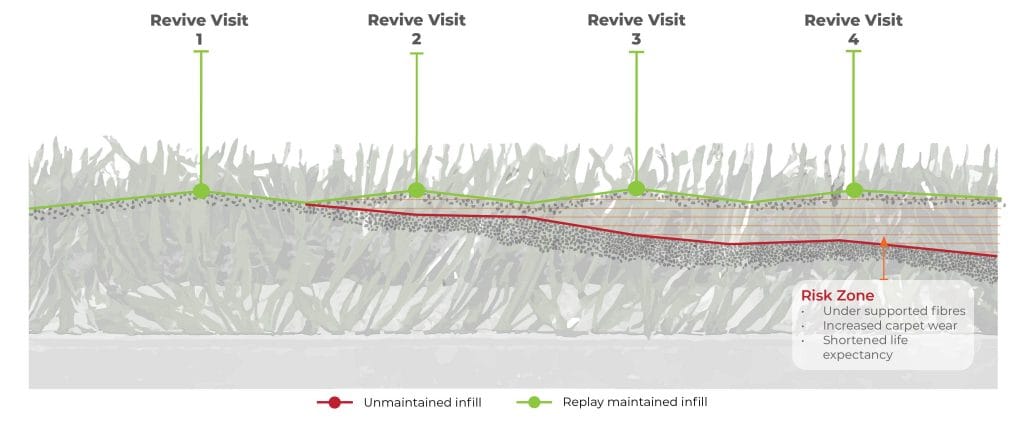
When infill levels start to drop or become unevenly distributed, the effects on your sports surface can be more serious than they first appear. Compaction is one of the most common issues; where the remaining infill becomes densely packed, reducing its ability to absorb impact. This leads to a harder surface underfoot, which can feel uncomfortable for players and increase the risk of injuries.
You might also notice bald patches where infill has been completely worn away, especially in high-traffic areas like goals or centre-pitches. These bare spots can affect the safety and experience of those using the pitch/court, causing uneven footing, slips and trips. Ball behaviour will also be affected in this instance – bounce and roll become unpredictable, which can lead to frustration for players.
Worse still, surfaces without sufficient or well-distributed infill wear out faster. The fibres take more direct impact, and the backing is exposed to increased stress, both of which reduce the lifespan of your synthetic surface. Compacted infill can also slow down drainage, increasing the risk of flooding or standing water on the pitch and/or court. Infill often migrates to the edges of the surface or collects in areas of lower activity, which is why regular monitoring and redistribution is so important.
How Replay keeps infill levels just right
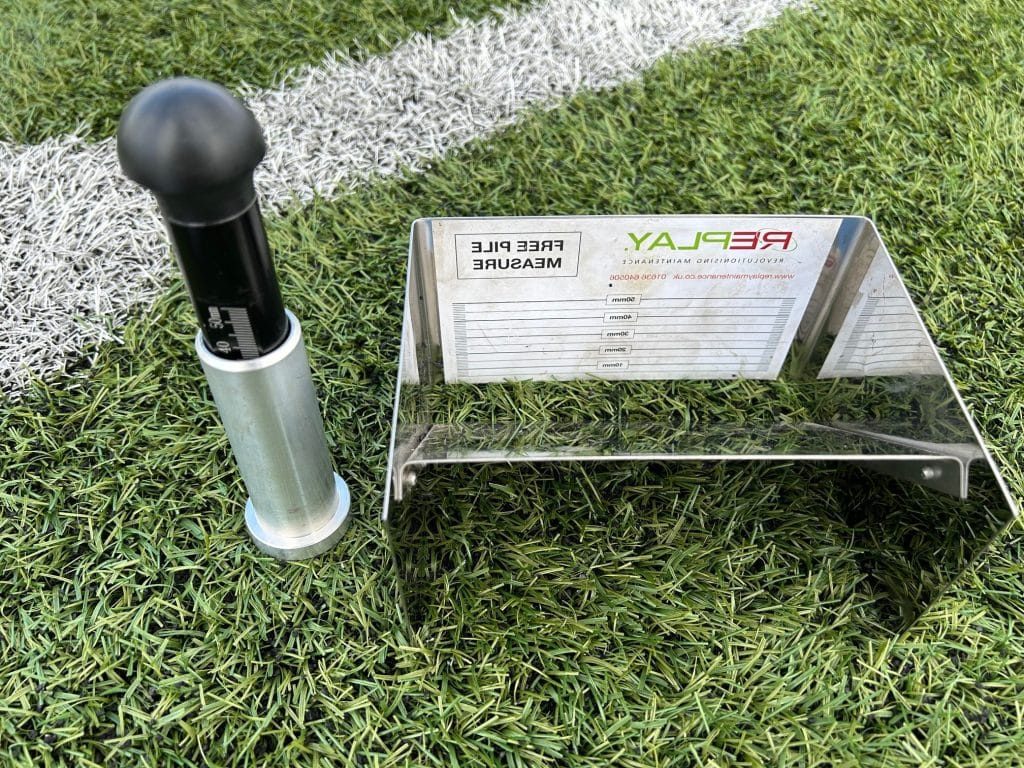
We understand that getting infill right isn’t just a one-off job – it’s an ongoing part of keeping your synthetic surface performing at its best. That’s why we offer free surface assessments, where our expert team checks the depth and distribution of your surface’s infill using specialist tools and expert knowledge. You’ll get a clear, no-obligation picture of your surface’s current condition and what it needs to stay match-ready.
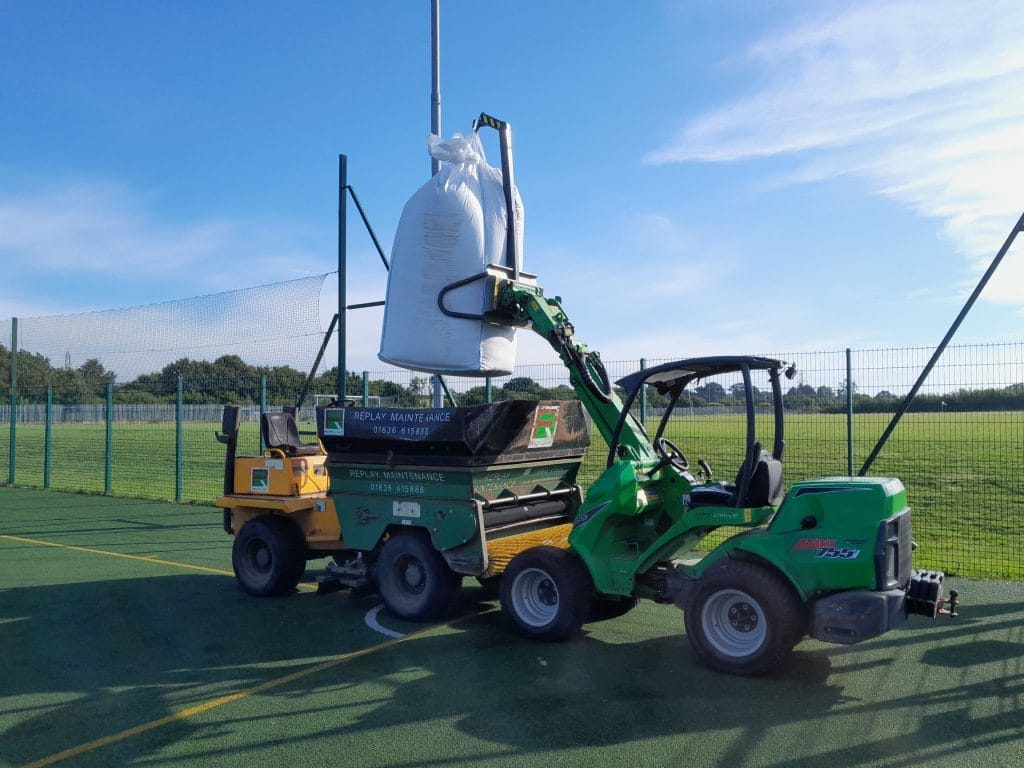
When a top-up is required, we use high-quality infill matched specifically to your surface type – whether that’s rubber, sand, or a blend. Our trained technicians then carry out the process, ensuring even coverage across the pitch/court and focusing on those high-wear zones that often need extra attention.
To book a free infill check or talk to the Replay team, visit our contact page or give us a call on 01636 640506.
Our Latest Articles